
Painful periods are often dismissed as “normal”, and many women with endometriosis spend years searching for answers before the condition is recognised. At Vertex Clinics, we provide careful evaluation and personalised endometriosis treatment in Salunke Vihar, Kondhwa, starting with a patient listening to your symptoms and an explanation of what may be happening in your body. Our aim is to help you manage pain, protect your fertility goals and regain control of your daily life.
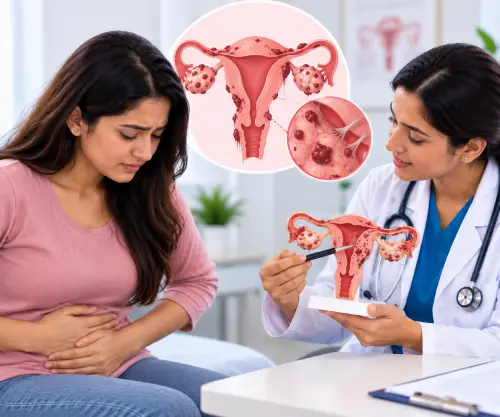
Endometriosis is a long-term condition in which tissue similar to the lining of the uterus grows outside the uterus, most often on the ovaries, fallopian tubes and the tissues of the pelvis.
This tissue responds to monthly hormonal changes, so it can swell and bleed like the uterine lining. Because the blood cannot leave the body, it can cause inflammation, pain and scar tissue (adhesions). Endometriosis is not an infection, and it is not caused by anything you did or did not do.
Endometriosis is estimated to affect about 1 in 10 women of reproductive age worldwide, though many remain undiagnosed for years.
Delays are common because symptoms overlap with other conditions, and because period pain is often considered normal. Early evaluation can shorten this journey.
The most common symptoms are severe period pain, long-lasting pelvic pain, pain during intercourse, heavy periods and difficulty conceiving.
Other symptoms women describe include:
Pain severity does not always match how widespread the disease is. Some women with mild disease have severe pain, and others with extensive disease have few symptoms.
Mild cramping is common, but pain that keeps you from school, work or daily activities, or that is getting worse over time, is not something you should simply tolerate.
If painkillers no longer help, or you miss days of work each month, it is time to see a gynaecologist.
The exact cause is not known. Possible factors include backward flow of menstrual blood, immune system differences, hormones and family history.
Women with a mother or sister who has endometriosis, early first periods, short cycles or long, heavy periods may be at higher risk.
Diagnosis begins with a detailed history and pelvic examination, followed by imaging such as an ultrasound or MRI, and sometimes a keyhole (laparoscopic) procedure to confirm the condition and treat it at the same time.
Our evaluation may include:
A normal ultrasound does not rule out endometriosis, because small deposits may not show up on scans.
Endometriosis may be superficial (on the lining of the pelvis), ovarian (endometriomas, sometimes called “chocolate cysts”) or deep infiltrating (growing into pelvic tissues and organs).
The type and location help us plan treatment, especially when bowel, bladder or fertility concerns are involved.
Treatment is individualised and may include pain medicines, hormonal therapy, minimally invasive surgery or fertility treatment, depending on your symptoms, age and plans for pregnancy.
Our approach to endometriosis treatment includes:
Surgery is not always required. We will discuss benefits, limits and recovery with you before any decision. Hormonal treatment controls symptoms while it is used, and symptoms may return after it stops, so long-term planning matters.
There is currently no permanent cure, but symptoms can be managed effectively, and many women lead full, active lives with the right treatment.
Endometriosis can return after treatment, and that is why regular follow-up is important. Symptoms usually ease after menopause.
Endometriosis can make it harder to conceive in some women, but many women with the condition still become pregnant, either naturally or with medical help.
It can affect fertility through scarring, damage to the tubes or ovaries, and inflammation. If you are planning pregnancy, early assessment is valuable, especially if you are over 35, because time matters. Our consultant, Dr. Ruchi N. Thakur, has a fellowship in infertility, which supports fertility-focused planning for women with endometriosis. Hormonal pills do not improve fertility and are not used when you are trying to conceive.
No. Symptoms may improve during pregnancy for some women, but pregnancy does not cure the condition, and symptoms can return afterward.
Long-term pain, fatigue and uncertainty can affect work, relationships, sleep and mood, and it is common for women to feel anxious or low.
Please tell us how you are coping. Pain control, rest, emotional support and, when needed, counselling are important parts of care.
Regular exercise, a balanced diet, good sleep, stress management and heat for cramps can help you feel better, though they do not replace medical treatment.
No specific diet has been proven to cure endometriosis. We suggest nutritious meals, adequate iron if your periods are heavy and avoiding unproven supplements without medical advice.
Seek urgent care for sudden severe pelvic pain, fever with pain, fainting or very heavy bleeding.
A ruptured or twisted ovarian cyst or other conditions can cause sudden severe pain and need prompt attention.
Choose a gynaecologist who takes your pain seriously, explains the full range of options and plans long-term follow-up and fertility goals with you.
Many women searching for the Best gynecologist in Salunke Nagar, Kondhwa have already been told their pain is “normal” and want a doctor who listens. Those looking for the Best Doctors For Endometriosis Treatment in Kondhwa often ask about the doctor’s experience with minimally invasive surgery and fertility. Dr. Ruchi N. Thakur (MBBS, MS OBGY), our consultant, has more than 22 years of experience in gynaecology, with a fellowship in infertility and training in laparoscopy and hysteroscopy. She takes time to explain your reports and choices without pressure.
Bring previous scans and reports, a list of medicines tried so far, and a short diary of your pain, periods and any bowel or bladder symptoms.
Even two or three months of notes help us understand your pattern.
No. Many women are managed with medicines. Surgery is considered in selected cases, such as severe pain, large cysts or fertility problems.
It is not cancer. There is a small increase in the risk of certain ovarian cancers, but the overall risk remains low. Regular follow-up is advised.
Yes. Severe period pain in teenagers should be evaluated, not ignored.
Rarely, and usually only after other options for women who have completed their families. We will discuss this carefully.
Gentle to moderate exercise often helps with pain and mood. Your doctor will advise what is suitable for you.
Living with ongoing pelvic pain can wear down your energy, confidence and plans, and you do not have to manage it alone. With careful evaluation, a treatment plan that fits your life and regular follow-up, many women find lasting relief from their symptoms. If you are looking for dependable endometriosis treatment in Salunke Vihar, Kondhwa, Vertex Clinics is ready to listen and guide you. Call +91 97303 44558 or book your appointment today.