
Irregular periods, unwanted hair, persistent acne or difficulty conceiving can feel confusing, and many women live with them for years before seeking help. At Vertex Clinics, we offer thorough, personalised PMOS treatment in Salunke Vihar, Kondhwa, with a clear diagnosis, a treatment plan matched to your goals and regular follow-up. Whether you want regular cycles, relief from symptoms or help planning a pregnancy, our team will guide you step by step.
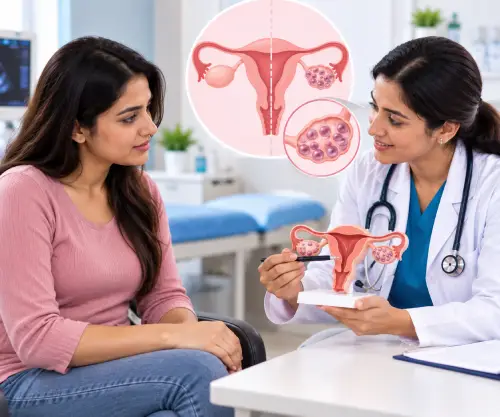
PMOS is a common hormonal and metabolic condition that affects ovulation, periods and other body systems. It is also widely written as PCOS (polycystic ovary syndrome), and in India many people call it PCOD. All three terms describe the same problem.
In PMOS, hormone levels, especially androgens (male-type hormones) and insulin, are out of balance. This can stop the ovaries from releasing an egg regularly. Despite the name, “polycystic” does not mean you have dangerous cysts. The small follicles seen on an ultrasound are immature eggs that did not mature. The World Health Organization estimates that the condition affects roughly 8 to 13 percent of women of reproductive age worldwide, and many remain undiagnosed.
Common symptoms include irregular or missed periods, acne, excess facial or body hair, scalp hair thinning, weight gain, darkened skin patches and difficulty conceiving.
Symptoms differ from one woman to another, and some women have only one or two. You should see a doctor if you notice:
The exact cause is not fully known, but insulin resistance, higher androgen levels, genetics and lifestyle factors all play a role.
Insulin resistance means the body needs more insulin than usual to control blood sugar. The extra insulin can push the ovaries to make more androgens, which interferes with ovulation. The condition often runs in families, and it can occur in women of any weight, including those who are lean.
Doctors usually diagnose PMOS when at least two of three features are present (irregular ovulation, signs of high androgens, and polycystic-appearing ovaries on ultrasound) after other causes have been ruled out.
Our evaluation may include:
Other conditions, such as thyroid disorders or high prolactin, can mimic PMOS, so we confirm the diagnosis carefully before starting treatment.
There is no single cure, but PMOS can be managed very effectively. Treatment depends on your symptoms and goals and may include lifestyle changes, medicines to regulate cycles and hormones, and fertility support.
Our approach to PMOS treatment is individual, not one-size-fits-all:
All medicines must be prescribed after evaluation. Please avoid starting hormonal tablets on your own.
Yes. Healthy eating, regular activity, good sleep and stress control are the foundation of management, and even modest weight loss in women who are overweight can help restore regular cycles.
Practical steps we often discuss:
Yes. Many women with PMOS conceive naturally or with medical support, because the condition mainly affects how regularly ovulation happens.
Evaluation helps us see whether you ovulate and how best to support you. A pregnancy planning consultation before conception is valuable, since it lets us check blood sugar, thyroid function and weight and start folic acid in time. Women with PMOS also have a higher chance of gestational diabetes and high blood pressure in pregnancy, so closer antenatal monitoring is advised.
Untreated PMOS can raise the risk of type 2 diabetes, high blood pressure, high cholesterol, sleep apnoea, thickening of the uterine lining and mood concerns such as anxiety and depression.
When periods are very infrequent, the uterine lining may build up without shedding, which over time can increase the risk of abnormal thickening. This is why we recommend regular cycles, or medicines that protect the lining, along with periodic health checks.
No. PMOS is a long-term condition. Symptoms may improve or change over time, but it needs ongoing care, particularly through different life stages.
It is a common myth that pregnancy or marriage cures it. Continuing healthy habits and regular follow-up helps keep symptoms and long-term risks in check.
Yes, it can begin in adolescence. Irregular periods are common in the first few years after menarche, so an adolescent needs careful evaluation before a diagnosis is made.
Early guidance on nutrition, activity and cycle health can help young women build habits that protect them for life.
Look for a gynaecologist who listens, explains your tests clearly, treats your whole health and plans follow-up rather than only prescribing tablets.
Many women searching for the Best gynecologist in Salunke Nagar, Kondhwa want an experienced doctor who takes the time to understand their symptoms and concerns. At Vertex Clinics, Dr. Ruchi N. Thakur (MBBS, MS OBGY) has more than 22 years of experience in women’s health and a fellowship in infertility. Patients looking for PMOS treatment in Kondhwa benefit from care that covers cycles, skin, weight, metabolism and fertility together, instead of treating one symptom at a time.
See a gynaecologist if you have missed periods, cycles longer than 35 days, signs of excess hair or acne, difficulty conceiving, or heavy bleeding.
Seek urgent care if you have very heavy bleeding, severe pelvic pain or fainting.
Bring past reports and scans, a list of current medicines, and a record of your last few periods.
A note of your weight changes, family history of diabetes and any previous treatments also helps us plan your care.
It cannot be permanently cured, but symptoms can be controlled very well with the right care.
They are one option to regulate periods and treat acne or hair growth, but whether they suit you depends on your health and goals. Your doctor will advise.
Not necessarily. Some women manage well with lifestyle changes alone, while others need medicines for a period of time. We review your plan regularly.
Yes, and we encourage it. Regular activity improves insulin sensitivity and mood.
No. It can affect women of every body size, including lean women.
You do not have to manage these symptoms alone or keep waiting for them to settle. With an accurate diagnosis, a personalised plan and regular follow-up, most women can restore healthier cycles and feel more in control of their health. If you are looking for dependable PMOS treatment in Salunke Vihar, Kondhwa, our team at Vertex Clinics is ready to support you. Call +91 97303 44558 or book your appointment today.